

Peaky Blinders
Wie der Stil der 1920er Jahre die moderne Herrenbekleidung prägte
Die 1920er Jahre waren eines der einflussreichsten Jahrzehnte in der Herrenmode. Es war eine Zeit, in der Schneiderei, Struktur und persönliche Präsentation Status und Selbstbewusstsein d...

Die 1920er Jahre waren eines der einflussreichsten Jahrzehnte in der Herrenmode. Es war eine Zeit, in der Schneiderei, Struktur und persönliche Präsentation Status und Selbstbewusstsein definierten. Anzüge wurden zum täglichen Muss, nicht nur zur formellen Kleidung. Ein Jahrhundert später prägt die Herrenmode der 1920er Jahre weiterhin die moderne Schneiderei durch ihre Stoffe, Passformen und Detailverliebtheit, deutlich sichtbar in heutigen Anzügen, Fernsehserien und der Popkultur.
Ein Jahrzehnt, das den Anzug neu definierte
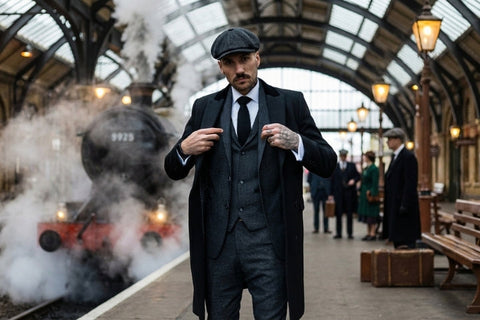
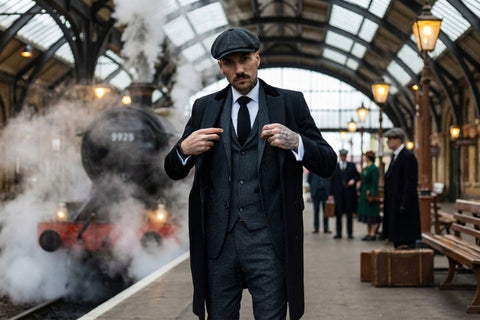
Der Erste Weltkrieg hatte großen Einfluss darauf, wie Männer sich kleideten. Das Design von Militäruniformen beeinflusste die zivile Kleidung und brachte schärfere Silhouetten und funktionale Details mit sich. Anzüge der 1920er Jahre zeichneten sich durch strukturierte Schultern, hoch taillierte Hosen und taillierte Westen aus. Der klassische Dreiteiler wurde zum Standard für Männer in Großbritannien und Europa.
Einreihige Jacken, oft aus Wolle oder Tweed gefertigt, ersetzten die schwereren viktorianischen Fräcke. Männer begannen, einfachere Schneiderkunst zu bevorzugen, die dennoch Stärke und Respektabilität vermittelte. Die Einführung von Gürtelschlaufen und etwas weiteren Hosen ermöglichte mehr Komfort, ohne die formelle Note zu verlieren. Diese Designentscheidungen spiegeln sich noch heute in der modernen Schneiderei wider.
Die Rolle von Stoffen und Farbe
In den 1920er Jahren experimentierten Männer mit Stoffen und Texturen. Tweed, Fischgrät und Wollmischungen waren in den kälteren Monaten üblich, während Leinen- und leichtere Baumwollanzüge im Sommer getragen wurden. Grau, Braun, Marineblau und Anthrazit blieben beliebt, weil sie praktisch und pflegeleicht waren, aber subtile Muster wie Karo und Nadelstreifen erschien auch in Geschäfts- und Freizeitanzügen.
Moderne Herrenmode schöpft weiterhin aus diesen Materialien. Tweed-Dreiteiler und Fischgrätjacken sind wieder zu Grundpfeilern geworden und bieten Textur sowie einen Hauch von Tradition. Viele zeitgenössische Designer beziehen sich direkt auf diese Muster und beweisen, dass die Handwerkskunst der 1920er Jahre nie an Relevanz verloren hat.
Einfluss des Kinos der 1920er Jahre und moderner TV-Produktionen
Das Bild des gut gekleideten Mannes in den 1920er Jahren wurde nicht nur von der Gesellschaft, sondern auch vom Film geprägt. Hollywood-Stars wie Clark Gable und Cary Grant machten glatte, taillierte Anzüge populär, die Charisma und Autorität ausstrahlten. Die britische Schneiderei folgte eng und produzierte Stile, die Raffinesse mit Männlichkeit verbanden.
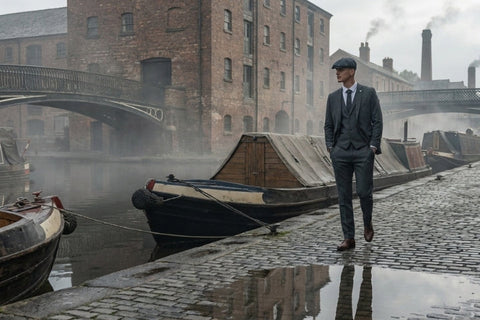
Jahrzehnte später erweckten Fernsehen und Film diese Ära für ein neues Publikum wieder zum Leben. Die BBC-Serie Peaky Blinders brachte die Schneiderkunst des Birmingham der 1920er Jahre mit seinen schweren Tweed-Anzügen, Wollmänteln und den charakteristischen Flat Caps wieder ins Rampenlicht. Tommy Shelbys präziser, zurückhaltender Look wurde zum Symbol für Disziplin und Ehrgeiz. Die Aufmerksamkeit für Stoff und Passform spiegelte alles wider, was authentische Herrenmode der 1920er Jahre ausmachte.
Andere Produktionen wie Boardwalk Empire, Downton Abbey und The Great Gatsby (2013) stärkten die Rückkehr der klassischen Herrenmode. Jede führte die Struktur, das Selbstbewusstsein und die Raffinesse der Garderobe der 1920er Jahre einem modernen Publikum wieder vor Augen. Infolgedessen entdeckten jüngere Generationen den Wert des bewussten Kleidens neu.
Herrenmode, die Status signalisierte
In den 1920er Jahren kommunizierte die Kleidung eines Mannes seinen gesellschaftlichen Status. Der Anzug war mehr als nur Kleidung, er war ein Zeichen von Respektabilität und Ehrgeiz. Arbeiterklasse-Männer investierten in ein oder zwei gut gemachte Anzüge für Geschäfts- und gesellschaftliche Anlässe, während die Mittelschicht begann, leichtere Stoffe und Accessoires wie Taschenuhren, Manschettenknöpfe und Krawatten zu verwenden.
Die Schiebermütze wurde zu einem Nationalsymbol. Sie war praktisch, erschwinglich und wurde von Männern aller Gesellschaftsschichten weit verbreitet getragen. Heute bleibt sie eines der bekanntesten Accessoires, die mit britischer Herrenmode verbunden sind.
Moderne Schneiderei trägt immer noch dieselbe Idee von Selbstbewusstsein und Präsentation. Ein gut geschnittener Anzug steht weiterhin für Disziplin und persönlichen Stolz, Ideen, die direkt auf die Werte der 1920er Jahre zurückgehen.
Die bleibende Wirkung auf die moderne Mode
Moderne Designer blicken weiterhin auf die 1920er Jahre als Inspirationsquelle zurück. Das Gleichgewicht zwischen Praktikabilität und Eleganz dieses Jahrzehnts prägte die heutige Anzugsherstellung. Maßgeschneiderte Westen, zweireihige Jacken und strukturierte Hosen dominieren nach wie vor die Herrenkollektionen.
Dieser Einfluss geht über formelle Kleidung hinaus. Elemente der Schneiderei der 1920er Jahre finden sich in Freizeitstücken wie maßgeschneiderten Overshirts, Wollhosen und heritage-inspirierter Oberbekleidung. Sogar Turnschuhe und moderne Jacken werden manchmal mit Tweed- oder Karostoffen kombiniert, die dieselben Texturen widerspiegeln, die vor einem Jahrhundert getragen wurden.
Die anhaltende Faszination für die 1920er Jahre hängt auch mit dem Aufstieg von vintage-inspirierten Hochzeiten, formellen Veranstaltungen und Themenfeiern zusammen. Männer orientieren sich immer noch am Stil dieser Ära als Modell für zeitlosen Geschmack, der nie veraltet oder übertrieben wirkt.
Kaufen Sie 1920er Anzüge bei TruClothing
Wir führen eine große Auswahl an Anzüge im Stil der 1920er Jahre und Accessoires, die für Männer entworfen wurden, die klassische Schneiderei schätzen. Unsere Kollektion umfasst Tweed-Dreiteiler, Fischgrätjacken, Wollwesten, formelle Hemden und Schiebermützen die das Handwerk der Ära widerspiegeln. Jeder Anzug wird sorgfältig aus hochwertigen Stoffen und mit traditionellen Details gefertigt, um die scharfe Struktur und den charakteristischen Stil der Herrenmode der 1920er Jahre einzufangen.
Bei TruClothing bringen wir stolz authentischen britischen Stil in moderne Garderoben und bieten zeitlose Designs, die weiterhin Selbstbewusstsein, Präzision und Tradition definieren.