

Suit style & fit
What Actually Makes a Men’s Suit Look Expensive
A high price does not guarantee that a suit will look good. An expensive jacket with poor fitting shoulders or trousers that bunch around the shoes can look worse than a reasonably priced...

A high price does not guarantee that a suit will look good. An expensive jacket with poor fitting shoulders or trousers that bunch around the shoes can look worse than a reasonably priced suit that fits properly.
What makes the biggest difference is usually fit, proportion, fabric and the finishing details. Get those right and a suit can look far more polished, regardless of the name on the label.
Fit matters more than the label
One of the first things people notice is how the suit sits on you. Pay particular attention to:
· The jacket shoulders should follow your natural shoulder line without hanging over the edge.
· The jacket should fasten without pulling across the chest.
· The collar should sit neatly against your shirt rather than leaving a noticeable gap.
· Sleeves should allow a small amount of shirt cuff to show.
· Trousers should fall cleanly rather than gathering heavily around the shoes.
· A waistcoat should sit close to the body and cover the trouser waistband.
The shoulders are particularly important because they are one of the hardest areas of a ready-made jacket to alter. Sleeve length, trouser length and minor waist adjustments are generally much easier for a tailor to correct.
A suit does not need to be extremely slim either. Cary Grant's grey suit in North by Northwest is a good example of tailoring with balanced proportions rather than a skin tight fit. Sean Connery's early James Bond suits followed a similar approach, with enough room to move while still looking sharp.
Fabric and structure make a difference
Fabric affects how a jacket holds its shape and how the trousers hang. It also changes how formal or relaxed a suit feels.
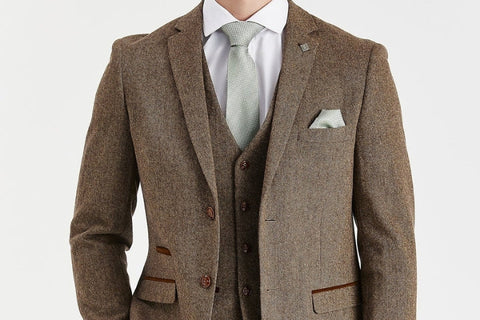
Plain navy, charcoal and grey rely heavily on a good cut because there is less pattern or texture to draw the eye. Tweed, herringbone and checked suit add more texture and can work particularly well for three piece tailoring and occasions where you want something with more character.
Look for:
· Fabric that does not have an excessive artificial shine.
· Lapels that sit cleanly against the chest.
· Checks that are neatly aligned across prominent seams where the construction allows.
· Cloth that suits the season and occasion.
· A clean trouser line without excess fabric around the ankle.
Linen is the exception when it comes to creasing. A linen suit will develop creases as you wear it, and that is part of the character of the fabric rather than a sign that the suit is poor quality.
Small details can change the whole outfit
Even a well fitting suit can be let down by the way it is finished. You do not need lots of accessories, but the basics should be right.
· Press your trousers before an important occasion.
· Polish your shoes.
· Make sure your shirt collar sits properly beneath the jacket.
· Avoid filling jacket pockets until they bulge.
· Choose a tie that looks in proportion with the lapels.
· Pick a pocket square that complements the tie rather than matching it exactly.
· Remove temporary stitching and external sleeve labels before wearing a new suit.
For weddings, race days and other smart occasions, good footwear makes a noticeable difference. Polished leather brogues or classic lace up shoes will usually look better than trying to compensate with more accessories.
You don’t have to stick to navy and grey
Colour alone does not make a suit look cheap or expensive.
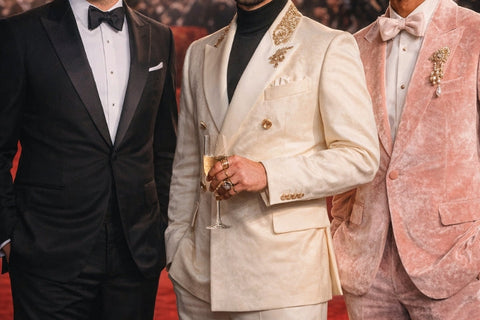
David Bowie regularly wore strong colours and unconventional tailoring, including the famous Freddie Burretti suit seen in the Life on Mars video. Harry Styles has also made bold colours, checks and three piece tailoring a regular part of his formal wardrobe.
Both show how much the cut and proportions matter when wearing something less traditional. The same principle applies to green suits, brown suits and stronger checks. If the fit is right and the rest of the outfit is kept under control, a less conventional colour can still look smart and well considered.
Spend your attention in the right places
If you want a suit to look its best, start with the shoulders and overall fit. Then check the sleeve and trouser length, look at how the fabric hangs and keep the styling simple.
You do not need the most expensive suit in the room. A suit that fits properly, hangs cleanly, is well pressed and is paired with the right shoes will usually look better than a more expensive one that does not fit as it should.